

Forget the War, it's fabricated
The scariest headlines always appear right before markets go up

This week the world looked like it was about to collapse:
Oil exploded.
War headlines everywhere.
Unemployment rising.
Mortgage rates jumping.
Investors rushed to safety - Gold, Silver, Real Estate.
But traditional markets barely moved.
That’s when you should start asking a dangerous question:
What if the fear itself is part of the system?
The Week of Maximum Fear
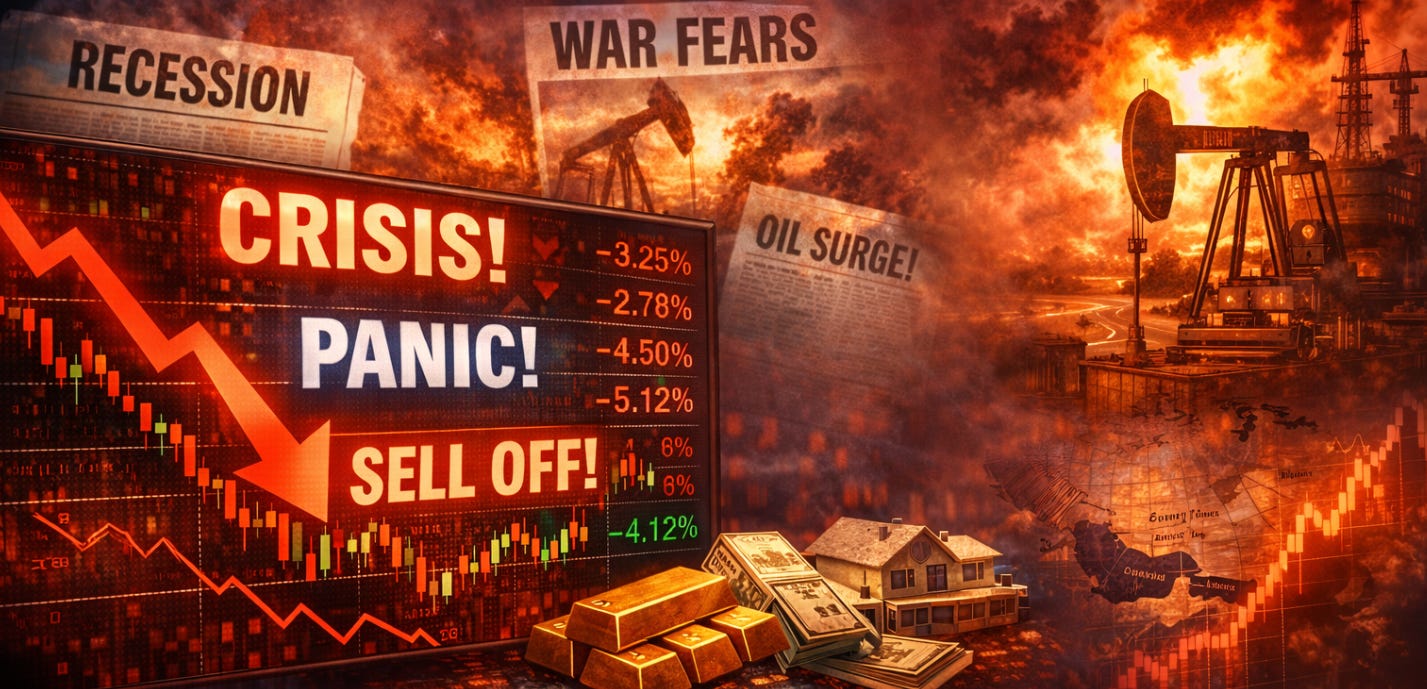
In just a few days we saw a perfect storm of headlines:
Oil prices surged after tensions around the Strait of Hormuz.
Jet fuel prices jumped nearly 70%.
The US unemployment rate rose to 4.4%.
Investors tried withdrawing billions from a fund run by BlackRock, forcing restrictions.
Normally this kind of news should trigger panic.
Stocks should collapse.
Crypto should crash.
Risk assets should bleed.
But, instead:
Markets dipped slightly… and stabilized.
That’s the first clue.
The Psychology Trap

When bad news dominates the headlines, investors do something predictable.
They sell risk.
And move their money into “safe” assets:
• Gold
• Real estate
• Cash
Right now that exact shift is happening.
Mortgage rates recently climbed near 6%, yet housing demand is rising.
Why?
Because fear pushes people into long-term decisions.
People think they’re protecting themselves from inflation.
But they might actually be doing something else:
Locking capital away right before the next rally.
Market Manipulation
After the Black Monday, the U.S. created the President’s Working Group on Financial Markets.
Traders call it the “Plunge Protection Team.”
Its job is simple - prevent market chaos.
Now combine that with another fact.
In 2020, JPMorgan Chase paid $920 million for manipulating metals markets using “spoofing” - basically placing fake orders to move prices.
So we know two things:
Markets can be stabilized.
And they can be manipulated.
The real question is - how often it happens.
Master, but during crisis, Gold should move up?
Correct. Gold is supposed to explode during crises.
Yet even after years of money printing and geopolitical tension this year, it moves… slowly.
Almost perfectly.
Just enough to look natural.
Now imagine if gold suddenly jumped to $10,000 per ounce.
Confidence in the dollar could collapse overnight.
Which raises a controversial question:
Is the gold market truly free?
Or carefully managed?
The War Economy

Another strange detail in the current conflict.
Nearly 20% of global oil supply passes through the Strait of Hormuz.
Technically, that route could be blocked overnight.
If it were, oil prices would explode.
But it remains open.
Which creates an uncomfortable possibility:
Sometimes geopolitical conflict benefits too many players to end quickly.
High oil prices mean profits for energy producers, governments, and commodity traders.
In that sense, war can start to look less like strategy…
And more like a business model.
But Crypto does nothing for the entire month?
You sure about that? Take a look at this chart:
Keep reading with a 7-day free trial
Subscribe to Strategy Master to keep reading this post and get 7 days of free access to the full post archives.